Muslim Representation Should Not Become a Political Taboo, Political representation must reflect India’s diversity.
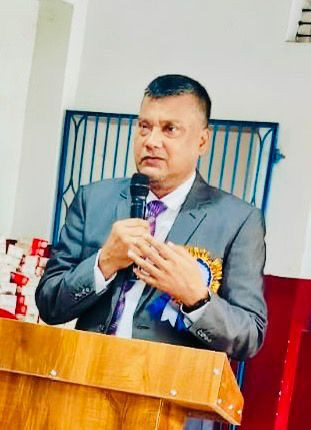
*By: Reyaz Alam*
Senior Corporate Professional & Social Activist
President (Eastern Region), Human Rights Justice Council
*New Delhi.
India’s democratic strength has always rested upon inclusive participation, constitutional values, and the equal representation of all sections of society. However, the growing political marginalisation of Muslims in representative politics raises serious questions about the direction in which democratic discourse is evolving.
Recent political trends indicate an increasing normalisation of reduced Muslim representation in electoral and governance structures. While political parties are free to define their electoral strategies, democracy suffers when any large community begins to feel systematically excluded from mainstream participation.
At the same time, it is equally important to recognise that the responsibility of representing Muslim concerns cannot and should not rest solely upon one political party. A healthy democracy requires that every national and regional political formation engage with all communities as equal stakeholders in nation-building.
The repeated electoral setbacks of overtly identity-centric Muslim political formations in states such as West Bengal, along with the limited expansion of similar politics elsewhere, clearly demonstrate that Indian Muslims are not seeking isolationist or exclusivist politics. The community, like every other section of Indian society, seeks dignity, equal opportunity, development, education, employment, justice, and constitutional protection within the broader national framework.
Reducing Muslim political participation to tokenism, silence, or confinement within a narrow political space risks creating a dangerous sense of democratic alienation. Political ghettoisation of any community ultimately weakens social cohesion and undermines the inclusive spirit envisioned by the Constitution of India.
Representation must never be viewed through the lens of appeasement or communal suspicion. Rather, it should be understood as a democratic necessity essential for preserving trust, participation, and national unity.
India’s future depends not upon selective inclusion, but upon a political culture where every citizen — irrespective of religion, caste, language, or region — feels seen, heard, and represented across the political spectrum.
At a time when polarisation threatens to overshadow dialogue, the need of the hour is mature leadership, constitutional commitment, and inclusive politics that strengthens the democratic fabric of the nation rather than fragmenting it.




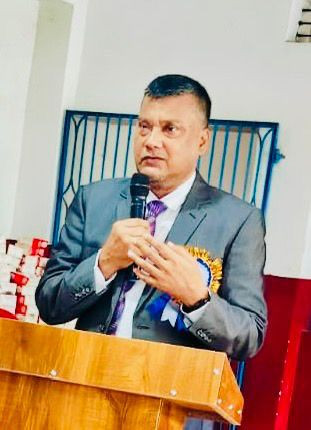
 Jr. Seraj Ahmad Quraishi